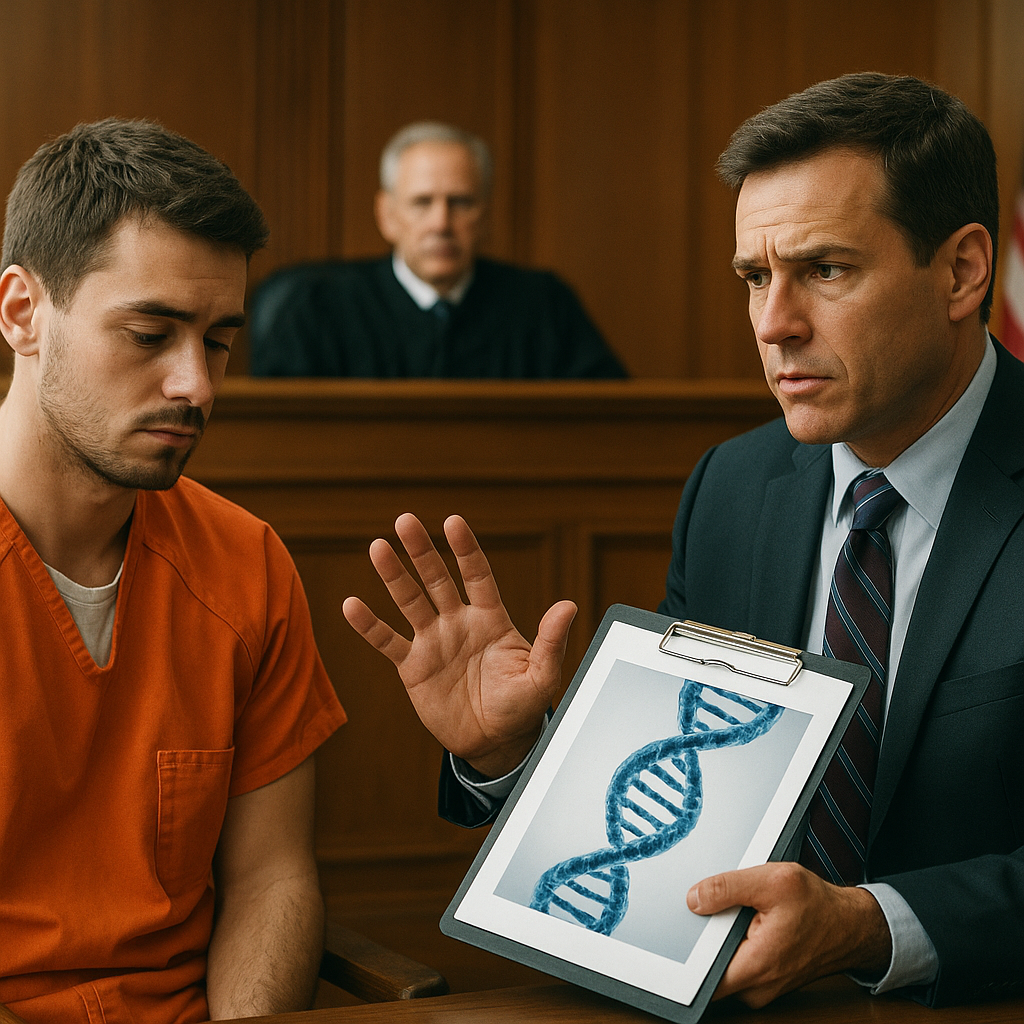
The advent of DNA profiling revolutionized criminal justice, offering a seemingly infallible window into individual identity. Yet, DNA evidence is not immune to scrutiny. Criminal lawyers play a critical role in ensuring that genetic proof meets stringent legal and scientific benchmarks before it influences a jury. This article examines how defense attorneys challenge DNA evidence and protect the rights of the accused.
Foundations of DNA Evidence Admissibility
Before DNA can secure a conviction, it must satisfy both procedural and scientific standards. Defense counsel often begin by questioning the reliability of laboratory analyses and the legality of the collection process.
Procedural Safeguards
- Chain of custody irregularities: A break in documentation can cast doubt on sample integrity.
- Fourth Amendment challenges: Illegally obtained specimens, such as warrantless swabs, can be suppressed.
- Disclosure compliance: Failure to provide full lab records violates discovery rules.
Scientific Criteria
- Validation studies: Has the lab adhered to peer-reviewed methodology?
- Accreditation status: Are technicians certified under recognized standards?
- Statistical thresholds: Do reported match probabilities rest on sound interpretation models?
Challenging Laboratory Practices
Defense lawyers frequently delve into the minutiae of forensic protocols. Even minor lapses in technique or documentation can dismantle the prosecution’s case.
Contamination and Human Error
DNA testing involves minute quantities of genetic material. Without rigorous controls, inadvertent transfer from an analyst’s glove or a previous case can produce false results. Attorneys investigate:
- Environmental monitoring logs
- Use of negative and positive controls
- Frequency of equipment decontamination
Amplification and Mixture Interpretation
Complex samples often contain DNA from multiple contributors. Experts use amplification techniques to isolate profiles, but mixtures pose unique challenges:
- Overlapping peaks in electropherograms
- Subjective threshold settings for allele detection
- Probabilistic genotyping software assumptions
Defense counsel may call a rebuttal expert to demonstrate that differing settings yield alternative conclusions, thereby undermining the certainty claimed by the prosecution’s analyst.
Statistical Analysis Under Fire
At trial, jurors often fail to grasp probabilistic language, leading to misinterpretation of match statistics. Lawyers exploit this confusion through targeted cross-examination.
Prosecutor’s Fallacy vs. Defense’s Fallacy
Common pitfalls include:
- Prosecutor’s fallacy: Presenting match probability as the probability of innocence.
- Defense’s fallacy: Overemphasizing population substructure to inflate uncertainty.
Attorneys clarify that a low random match probability does not equate to proof beyond a reasonable doubt if the denominator population is mischaracterized.
Complex Database Issues
Statistical calculations often rely on reference databases. Counsel may question:
- Population representativeness: Does the database reflect relevant ethnic groups?
- Hardy-Weinberg equilibrium assumptions: Are allele frequencies stable?
- Sample size adequacy for rare alleles.
Legal Precedents and Evidentiary Standards
Understanding landmark rulings empowers defense teams to frame objections effectively.
Daubert and Frye Tests
Courtrooms apply differing admissibility thresholds:
- Daubert: Emphasizes a trial judge’s gatekeeping role and considers factors such as peer review and error rates.
- Frye: Focuses on general acceptance within the relevant scientific community.
Lawyers prepare detailed motions in limine to exclude flawed DNA data before jurors enter the courtroom.
Key Appeals Decisions
- Cases highlighting the importance of raw data disclosure.
- Rulings emphasizing expert impartiality and the risk of “junk science.”
- Appellate decisions mandating precise jury instructions on statistical evidence.
Strategic Use of Expert Witnesses
Defense teams often retain independent scientists to dissect the prosecution’s methodology. A credible expert can:
- Conduct a meticulous review of lab notebooks and instrument logs.
- Reanalyze genetic profiles using alternative software or thresholds.
- Provide clear, layperson-friendly explanations to the jury.
Effective Cross-Examination Techniques
Skilled attorneys target:
- Discrepancies between standard operating procedures and the analyst’s actual practice.
- Internal lab audits revealing past deficiencies.
- Statements in peer-reviewed literature about limitations of specific kits or reagents.
Presentation of Alternative Theories
Sometimes the best defense involves suggesting a plausible scenario for DNA transfer unrelated to the alleged crime. Arguments may include:
- Secondary transfer via shared surfaces or handling.
- Laboratory cross-contamination from previously processed specimens.
- Environmental persistence of DNA in public spaces.
Emerging Trends and Future Challenges
Technological advances constantly reshape the forensic landscape. Lawyers must stay ahead of developments such as:
Next-Generation Sequencing
This method provides richer genetic data but raises new questions:
- Privacy concerns over sensitive trait information.
- Validation standards for massively parallel sequencing platforms.
- Interpretation of complex haplotype patterns.
Genetic Genealogy and Privacy
Investigators now leverage public genealogy databases, but defense counsel argue:
- Lack of informed consent from distant relatives.
- Potential Fourth Amendment implications of familial DNA searches.
- Ethical constraints on data use beyond original consumer purposes.
In an era where genetic science evolves rapidly, criminal lawyers remain vigilant. Through rigorous examination of procedures, statistical analyses, and emerging technologies, they uphold the principle that every individual deserves a fair trial.