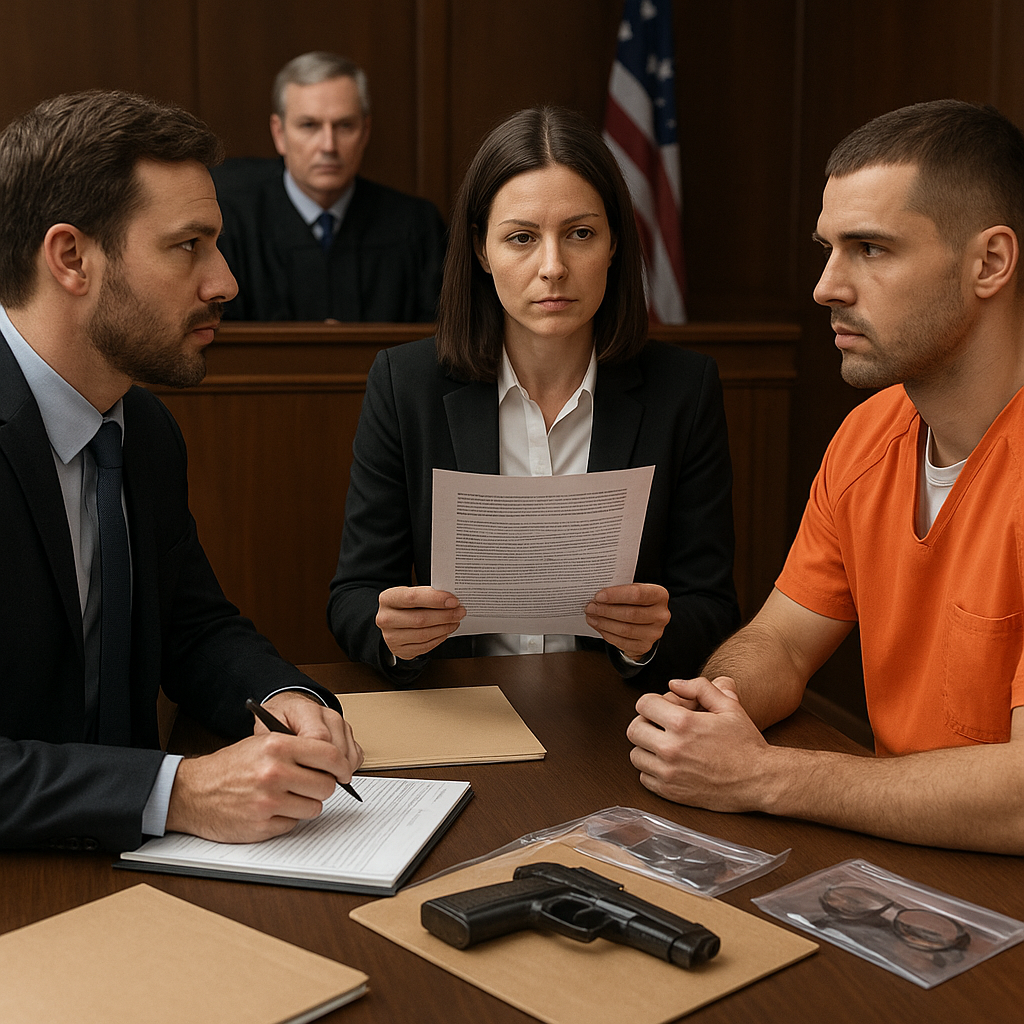
In the realm of criminal justice, the deployment of strong, reliable evidence can determine the trajectory of a case and safeguard defendants’ rights. Criminal lawyers navigate a complex landscape of legal procedures, scientific analysis, and tactical courtroom maneuvers to construct a convincing defense. This article explores how evidence is acquired, challenged, and leveraged to uphold the presumption of innocence and secure just outcomes.
Gathering and Preserving Evidence
Types of Evidence
Defense attorneys rely on various forms of proof to build a persuasive case. Understanding these categories is essential for developing an effective strategy:
- Physical Evidence: Tangible items such as weapons, clothing, or other objects that can be examined or tested.
- Documentary Evidence: Written records, electronic communications, financial statements, or official reports that support facts.
- Testimonial Evidence: Witness accounts, whether from eyewitnesses, bystanders, or character witnesses, offering narrative descriptions.
- Forensic Evidence: Scientific analyses including DNA profiling, ballistics, toxicology, and digital data retrieval.
- Demonstrative Evidence: Charts, diagrams, simulations, or reconstructions designed to illustrate key aspects of the case.
Chain of Custody
Maintaining an unbroken chain of custody is vital to ensure that physical and digital materials remain unaltered from the moment of collection to their presentation in court. Defense counsel will scrutinize every transfer record, examining:
- Collection documentation noting time, place, and personnel involved.
- Sealing and labeling procedures that guard against tampering.
- Storage conditions preventing contamination or degradation.
- Logbooks or electronic tracking for each individual who handled the item.
Any gaps or inconsistencies in this chain can provide grounds for a motion to suppress evidence on the basis of potential contamination or misconduct.
Pretrial Procedures and Evidence Challenges
Motion to Suppress
A critical weapon in the defense arsenal, a motion to suppress seeks to exclude unlawfully obtained items or statements. Common bases include:
- Unconstitutional search and seizure under the Fourth Amendment.
- Coerced confessions or statements violating the Fifth Amendment.
- Chain of custody breaches raising authenticity concerns.
Successful suppression can weaken the prosecution’s case significantly, forcing them to proceed with a narrower evidentiary base.
Disclosure and Discovery
Under rules of criminal procedure, the defense must request and receive all relevant material the prosecution plans to use. Key components include:
- Police reports and arrest records.
- Witness statements, including recantations or prior inconsistent accounts.
- Forensic and laboratory analyses.
- Records of any plea negotiations or cooperation agreements with informants.
Effective criminal defense involves meticulously reviewing these documents to identify weaknesses and prepare cross-examinations that expose biases, errors, or false impressions.
Trial Strategies and Use of Evidence
Direct Examination
During direct examination, defense attorneys present their own witnesses and evidence to establish an alternative narrative. This stage emphasizes clarity and coherence:
- Crafting questions that allow the witness to highlight positive aspects of the defense case.
- Using exhibits such as diagrams or video footage to reinforce testimony.
- Ensuring that expert interpreters break down technical data for jurors.
Consistent, credible testimonies help the jury accept the defendant’s version of events and cast reasonable doubt on the prosecution’s assertions.
Cross-Examination
Cross-examination represents a pivotal moment for challenging the credibility of prosecution witnesses and undermining adverse testimony. Defense counsel aims to:
- Expose contradictory statements or prior inconsistent declarations.
- Highlight perceptual limitations or memory lapses of eyewitnesses.
- Question motives and allegiances of informants or cooperating witnesses.
- Test the reliability of forensic methodologies by probing laboratory procedures.
Skilled attorneys craft precise, leading questions that confine witnesses to “yes” or “no” answers, maximizing the chance to reveal inconsistencies.
Expert Witness Testimony
Specialized expert witnesses can translate complex scientific or technical subjects into understandable terms. Common fields include:
- Forensic pathology, determining causes of injury or death.
- Digital forensics, recovering data from electronic devices.
- Psychology or psychiatry, assessing competency and mental state.
- Ballistics analysis, linking projectiles to specific firearms.
Defense attorneys vet these experts thoroughly, assessing credentials, publications, and courtroom demeanor. Well-prepared experts can counteract prosecution claims, present alternative findings, or testify to margins of error that cast doubt on scientific certainty.
Emerging Trends in Evidence Use
Digital Forensics
The rise of smartphones, social media, and cloud storage has enriched both prosecution and defense with troves of digital footprints. Attorneys may employ specialized teams to:
- Retrieve deleted messages, call logs, or GPS coordinates.
- Authenticate digital photographs and video for signs of editing.
- Analyze metadata to establish timelines or communication patterns.
Properly analyzed digital evidence can corroborate alibis, disprove timelines, or reveal third-party culpability.
Artificial Intelligence and Predictive Analytics
AI tools now assist in sorting voluminous data, identifying patterns, and flagging anomalies in large document sets. Criminal defense applications include:
- Rapidly reviewing thousands of pages for exculpatory material.
- Predicting jury behavior or sentiment based on past verdicts.
- Simulating adverse cross-examination responses to refine questioning strategies.
While these technologies offer efficiency gains, defense teams must remain vigilant about algorithmic biases and ensure transparency regarding analytical methods.
Upholding the Burden of Proof and Preserving Rights
A cornerstone of the adversarial system is the prosecution’s obligation to prove guilt beyond a reasonable doubt. Defense attorneys champion the burden of proof principle by:
- Highlighting exculpatory evidence that undermines the state’s narrative.
- Underscoring alternate explanations for forensic results or eyewitness reports.
- Ensuring that jurors understand that doubt need not be absolute to mandate acquittal.
Through diligent pretrial work, precise courtroom tactics, and mastery of evidentiary rules, criminal defense lawyers fortify the rights of the accused and strive for just resolutions in every case.